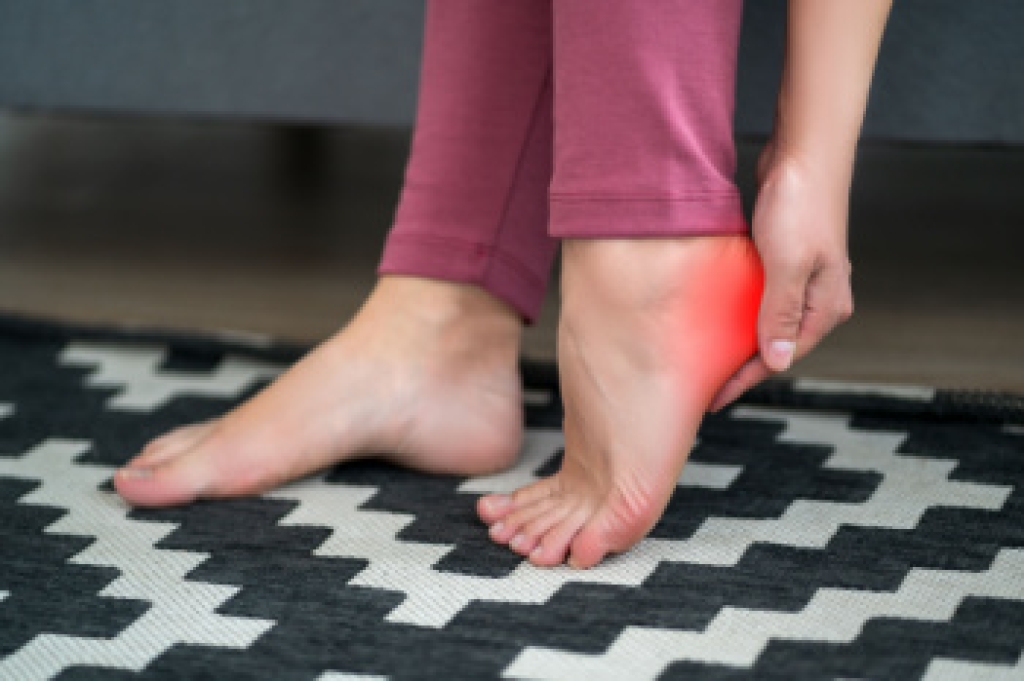
Heel spurs are bony growths that develop on the heel bone and may be associated with heel pain. Two common types can form in different areas of the heel. A plantar heel spur develops on the bottom of the heel where the plantar fascia connects to the bone. The plantar fascia is a strong band of tissue that extends along the bottom of the foot. These heel spurs often have a hook-like shape and may occur with plantar fasciitis. Although heel spurs are common, many do not cause symptoms. The likelihood of developing bone spurs also increases with age.
Plantar heel spurs can develop as the bone responds to repeated stress. Strain on the foot muscles and ligaments, excessive stretching of the plantar fascia, or repeated damage to the heel bone lining may contribute to their formation. Heel spurs are also associated with obesity and osteoarthritis. Another type of heel spur can develop at the back of the heel where the Achilles tendon attaches to the bone. This type is associated with insertional Achilles tendonitis. The bone growth may irritate the Achilles tendon and contribute to further tendon damage or heel pain. This problem often develops gradually rather than following one specific injury.
A podiatrist can evaluate heel pain and determine whether a heel spur or a related foot problem may be involved. The location of discomfort can provide important information because heel spurs may develop on the bottom or back of the heel. A podiatrist can also assess how symptoms affect ankle movement and daily activities. Since many heel spurs do not cause pain, identifying the actual source of discomfort is an important part of determining appropriate treatment. Heel pain associated with the Achilles tendon may become worse when running, jumping, or climbing stairs. If ongoing heel pain is interfering with comfortable walking or physical activity, it is suggested that you consult a podiatrist for an evaluation and appropriate treatment options.
Heel spurs can be incredibly painful and sometimes may make you unable to participate in physical activities. To get medical care for your heel spurs, contact Judson Siegel, DPM from Assabet Family Podiatry. Our doctor will do everything possible to treat your condition.
Heels Spurs
Heel spurs are formed by calcium deposits on the back of the foot where the heel is. This can also be caused by small fragments of bone breaking off one section of the foot, attaching onto the back of the foot. Heel spurs can also be bone growth on the back of the foot and may grow in the direction of the arch of the foot.
Older individuals usually suffer from heel spurs and pain sometimes intensifies with age. One of the main condition's spurs are related to is plantar fasciitis.
Pain
The pain associated with spurs is often because of weight placed on the feet. When someone is walking, their entire weight is concentrated on the feet. Bone spurs then have the tendency to affect other bones and tissues around the foot. As the pain continues, the feet will become tender and sensitive over time.
Treatments
There are many ways to treat heel spurs. If one is suffering from heel spurs in conjunction with pain, there are several methods for healing. Medication, surgery, and herbal care are some options.
If you have any questions, please feel free to contact our offices located in Marlborough and Plainville, MA . We offer the newest diagnostic and treatment technologies for all your foot care needs.
